



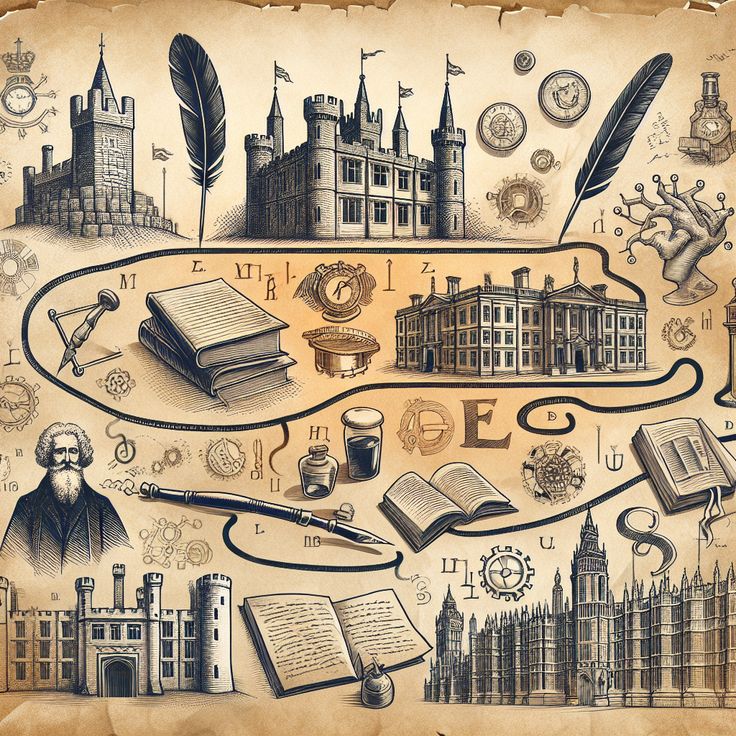
Introduction to the History of Education in England
The development of education in England is a rich and varied history that spans centuries, reflecting significant societal, economic, and political changes.
Understanding education in England, a brief history reveals its evolution from informal medieval education to the structured systems in place today.
The history of education in England can be traced back to the medieval period, where education was predominantly available through the Church and monasteries, targeting primarily the clergy and the elite.
During this period, the curriculum focused largely on religious studies, Latin, and the liberal arts, laying the groundwork for later educational methods.
The advent of the Renaissance brought about a shift where humanism influenced education, emphasising secular subjects alongside traditional religious instruction.
Education in England, a brief history, is incomplete without acknowledging the significant transformations during the Victorian era, a period marked by industrial progress and social reforms.
The enforcement of compulsory education laws in the late 19th century was pivotal, driven by the belief that an educated populace was vital for economic progress and the growth of the British Empire.
This era saw a substantial rise in literacy rates and the establishment of primary education accessible to children across different social strata.
The expansion of urban areas and the rise of the middle classes further accelerated the demand for education, with new schools being established to cater to the growing population.
The Industrial Revolution left an indelible mark, introducing technical education aimed at supporting industrial development and increasing the skilled workforce necessary for Britain’s booming economy.
Post World War II, the Butler Education Act of 1944 was a landmark in the history of education in England, standardising secondary education and promoting meritocracy through the grammar school system.
The impact of these historical developments is still evident in the current educational landscape, where education continues to evolve to meet modern societal and economic needs.
In conclusion, understanding education in England, a brief history, not only aids in appreciating the depth of its educational traditions but also highlights the ongoing challenge of adapting to the needs of an ever-changing society.

Early Education Systems
Understanding the early education systems is essential to grasp the evolution of education in England, a brief history that reveals the foundation of modern educational practices.
The origins of formal education in England can be traced back to the medieval period when the Church played a crucial role in educating children, primarily boys, through cathedral schools and monastic institutions.
These schools primarily focused on religious instruction, Latin, and the trivium, which included grammar, rhetoric, and logic.
As society progressed into the Tudor period, the establishment of grammar schools marked a significant development in education in England.
These institutions aimed to provide education beyond religious content, incorporating subjects like English, mathematics, and science.
The 16th century saw the rise of humanist ideals, influencing education to include classical learning, which offered a broader curriculum to more affluent children, setting a precedent for the modern education system.
Meanwhile, the growth of trade and commerce necessitated a more skilled workforce, prompting elements of technical and practical education to be introduced gradually.
Private tutoring was common among the nobility and the wealthy, further stratifying education based on socioeconomic status.
The Industrial Revolution brought about significant societal shifts, which began to challenge the existing class-based educational structure.
The subsequent demand for educated workers initiated reforms that would ultimately shape educational access and policy development.
By analysing these early education systems, we can appreciate how historical contexts have influenced and shaped the educational landscape in England.
This insight not only informs the curriculum and teaching methodologies used today but also aligns with the mission of Thomas Keith Independent School to deliver quality education, rich with historical understanding and modern relevance.
Victorian Era Educational Reforms
The Victorian era was a pivotal period in the education in England, a brief history of which reveals transformative reforms that shaped the modern educational landscape.
These reforms were driven by the need to address social and economic changes brought about by the Industrial Revolution.
During the Victorian period, the British education system underwent significant restructuring to accommodate the demands of an increasingly industrialised society.
The introduction of compulsory education was among the most crucial reforms.
In 1870, the Forster Education Act was enacted, marking a significant milestone by establishing the framework for compulsory education.
This Act aimed to provide universal elementary schooling, ensuring that children, especially from lower socio-economic backgrounds, had access to education.
Before these reforms, education was largely inaccessible to the working class, with many children engaged in labour rather than attending school.
The Act addressed these social inequalities by creating school boards to build and manage schools in communities across England.
As a result, the concept of child labour began to decline, reflecting a societal shift towards valuing education over factory work for children.
The educational reforms of the Victorian era also extended to the curriculum and teacher training.
Education during this time increasingly focused on reading, writing, and arithmetic, often referred to as the 3 Rs, providing foundational skills essential for both further education and the workforce.
Additionally, the era saw the rise of pedagogical advancement, with a greater emphasis on training competent educators to improve teaching standards.
The rise of the middle classes also played a role in shaping educational reforms.
As this social group expanded, so too did the demand for quality education, which in turn led to the establishment of grammar schools and the precursors to modern secondary education.
A rapidly growing urban population further pressured the education system to expand and adapt to these societal needs.
These Victorian reforms were instrumental in laying the groundwork for future educational progress, heralding a new age where education became a fundamental right rather than a privilege.
From establishing compulsory schooling to enhancing curriculum and pedagogy, the Victorian era was undeniably influential.
The period highlighted the importance of education in nurturing a well-rounded, informed citizenry capable of contributing to society’s progress.
Thus, the legacy of Victorian educational reforms continues to resonate within the structure and philosophy of educational systems today, including institutions like our own Thomas Keith Independent School.
These historical strides in education underscore the importance of adapting educational models to meet the evolving needs of society.
The Industrial Revolution and Its Impact on Education
The education in England, a brief history, is profoundly shaped by the transformative period of the Industrial Revolution.
This era, primarily spanning the late 18th to the early 19th century, marked a significant shift in the social and economic landscape of Britain.
The Industrial Revolution catalysed numerous changes, including the emergence of urban centres and a burgeoning factory system, which necessitated a re-evaluation of the existing educational paradigms.
Rapid industrialisation led to significant population growth in urban areas, such as Manchester, Birmingham, and Liverpool, as people migrated from rural locales for employment opportunities.
This demographic shift highlighted the need for a more systematic approach to education that could address the demands of a changing society.
Previously, education was largely the preserve of the wealthy, but the social reforms during this period aimed to extend educational opportunities to wider segments of the population.
The introduction of factory legislation, such as the Factory Acts, played a pivotal role in this transformation.
These laws restricted child labour, thus creating a demand for schooling as children were no longer spending their entire day in factories.
Consequently, the government began to see education as a tool for social progress and economic efficiency.
The need for a literate and numerate workforce became increasingly apparent as new technologies and industrial practices evolved.
Educational reformers advocated for the establishment of formal schooling systems that could equip young people with the skills required in an industrial economy.
Institutions such as Sunday schools and Ragged schools emerged during this time, providing basic education to children from working-class and impoverished families.
These schools were often locally organised and reflected a community’s commitment to education, even in the absence of comprehensive state intervention.
Furthermore, the Industrial Revolution highlighted the critical role of technical and vocational education in supporting industrial growth.
Efforts were made to incorporate practical skills into the curriculum, ensuring that students could directly contribute to the economic needs of the nation.
In sum, the Industrial Revolution significantly impacted education in England by prompting major educational reforms that sought to adapt to the demands of an industrialised society.
As Britain transitioned into this new era, the education system evolved, laying the foundation for the comprehensive educational structures we are familiar with today.
Understanding the intersection between industrialisation and education offers valuable insights into the enduring challenges and opportunities in developing a responsive educational system.
20th Century Developments in Education
The education in England, a brief history during the 20th century, was marked by significant transformation and reform, shaped by broader societal changes.
One major development was the introduction of the Fisher Education Act of 1918, which raised the school leaving age to 14 and expanded opportunities for children to receive a formal education.
This act symbolised a shift towards recognising education as a critical component of national progress and individual growth.
Following the devastation of World War II, the 1944 Education Act, also known as the Butler Act, revolutionised the educational landscape.
This act established a tripartite system of secondary education that included grammar schools, secondary technical schools, and secondary modern schools.
It aimed to provide a more equitable education system by catering to different aptitudes and abilities.
Education during this period increasingly became a tool for social mobility, particularly as the rise of the welfare state highlighted the importance of educating the masses for a democratic society.
Secondary education became more accessible, and comprehensive schools started to emerge in the late 20th century, moving away from the rigid tripartite system.
This change was driven by the need to provide a more inclusive educational experience that recognised diverse talents and fostered equality.
The focus on education was further strengthened by the education reform acts of the 1980s and 1990s, which introduced the National Curriculum and standardised testing.
These measures sought to elevate educational standards and ensure accountability, reflecting a growing demand for improvements in quality and outcomes.
Meanwhile, teachers’ training and qualifications were enhanced, recognising the critical role of educators in delivering high-quality education.
Throughout the 20th century, educational reforms in England underscored the recognition of education as a fundamental right and a cornerstone for achieving a more just and equitable society.
By understanding these developments, Thomas Keith Independent School remains committed to upholding these values, ensuring that every child receives a comprehensive and forward-thinking education that prepares them for a rapidly changing world.
Modern Education in England
Understanding the evolution of education in England, a brief history of which reveals significant transformations, is essential in grasping how modern educational practices and policies have developed.
The landscape of modern education in England is characterised by a diverse array of educational institutions, curricula, and pedagogical strategies.
In present times, the education system in England is structured in three main stages: primary education, secondary education, and higher education, each playing a crucial role in shaping the minds of young learners.
Primary education forms the foundation, focusing on the basic skills of literacy and numeracy, and fostering a nurturing environment for children to explore a wide range of subjects.
Secondary education then builds on these foundations, offering a more specialised and intensive curriculum, preparing students for potential tertiary education or immediate entry into the workforce.
At Thomas Keith Independent School, we emphasise the importance of these formative years in ensuring that pupils are equipped with both the knowledge and skills required to thrive in an ever-evolving society.
The modern era has also seen a surge in technology use, integrating digital tools into classrooms to enhance learning experiences.
This integration supports innovative teaching methods and adapts to the needs of diverse learners, embodying how historical developments impact today’s educational practices.
Significant policy reforms, such as the introduction of the National Curriculum, have standardised learning objectives, ensuring consistency across schools, yet allowing autonomy in teaching approaches.
Furthermore, the emphasis on inclusivity and diversity reflects broader social reforms, advocating for equal opportunities regardless of a pupil’s background or abilities.
In modern education, continuous professional development for teachers is paramount.
This ensures that educators remain adept at utilising new teaching techniques and addressing the unique challenges that contemporary education presents.
These developments highlight the commitment to progress and innovation within the educational sphere in England, a commitment we share at Thomas Keith Independent School as we strive to provide a comprehensive and current learning environment for our students.
Influential Figures in English Education
The education in England, a brief history, is punctuated by the contributions of several influential figures who have shaped and transformed the landscape of education.
Their efforts have fundamentally moulded the educational policies and practices in place today.
One of the most significant influencers is Thomas Arnold, headmaster of Rugby School, who championed the idea of a broad, liberal education.
Arnold’s philosophy emphasised both intellectual attainment and moral development, altering perceptions of public schooling during the 19th century.
Samuel Wilderspin is another key figure whose innovative approach toward infant education laid the groundwork for modern teaching methodologies.
His focus on social reform and child-centred pedagogy highlighted the importance of early childhood education as the foundation for lifelong learning.
The education in England, a brief history, is also deeply intertwined with the work of women like Dorothy L. Sayers and her advocacy for classical learning during the 20th century.
Sayers’s influence ensured that rigour and critical thinking remained central to educational pursuits and curricula, even during times of rapid societal change.
Furthermore, the contributions of Andrew Bell and Joseph Lancaster cannot be understated in the context of mass education during the Industrial Revolution.
Their Monitorial System, introduced in the early 19th century, allowed a single teacher to instruct large groups of students through the use of student monitors, significantly impacting the scalability of education.
In the more modern context, Sir Ken Robinson has been highly influential in advocating for creativity and innovation within education systems.
His ideas challenge traditional models and seek to inspire an education system that is more aligned with the demands of the 21st century.
Through an analytical lens, the education in England, a brief history is a tapestry woven with the contributions of these remarkable individuals who have influenced educational policy, theory, and practice.
Their legacies continue to be relevant as England navigates the complexities of modern education and seeks to prepare students for an increasingly interconnected world.
Conclusion: The Evolution of Education in England
In examining the education in England, a brief history reveals a narrative of continuous transformation and adaptation.
The evolution of education in England reflects societal changes, political reforms, and economic shifts throughout the centuries.
From early religious teachings to the establishment of public schools, each era contributed distinctively to the development of educational systems.
The Industrial Revolution marked a pivotal transition, bringing about a need for technical skills and literacy that reshaped educational priorities.
Victorian reforms further expanded access to education, emphasising the importance of schooling for all children, regardless of social standing.
In the 20th century, the introduction of policies aimed at inclusivity, such as the Education Act of 1944, significantly altered the educational landscape, laying the groundwork for modern educational practices.
Today, education in England is a dynamic field, influenced by technological advancements and a globalised world, as it continues to strive for excellence and equality.
Thomas Keith Independent School, while embodying these historical transformations, remains committed to providing quality education, as informed by the rich history of educational progress in England.
This commitment underscores the importance of understanding the past to effectively navigate the future of education, ensuring that students are equipped with knowledge and skills for an ever-changing world.
By appreciating the education in England, a brief history not only enriches our perspective but also guides educational institutions in fostering an environment of lifelong learning and development.
