





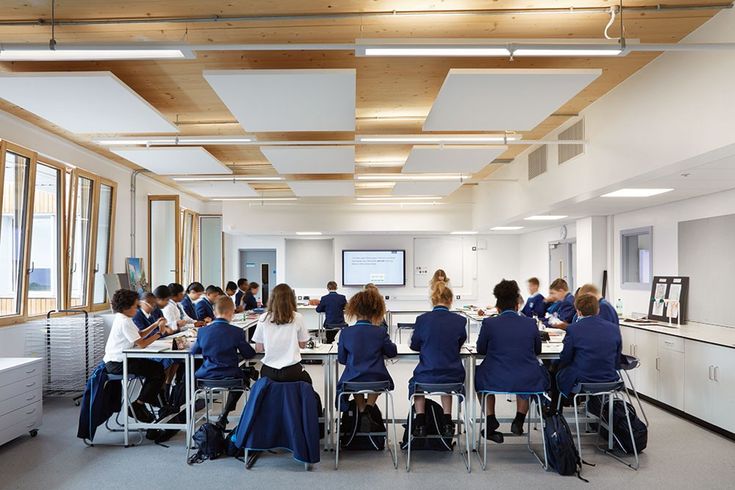
Introduction to UK Secondary School Academies
The concept of UK secondary school academies has transformed the landscape of education across England.
Academies represent a shift towards more autonomous institutions, allowing each academy to operate independently of local authority control.
Unlike traditional maintained schools, UK secondary school academies have the freedom to innovate with their curriculum, staffing, and finances, providing an enriched education experience that can be tailored to the needs of their pupils.
These academies receive funding directly from the government, bypassing local councils, which provides them with more control over their budgets.
The academisation of schools has been a significant policy initiative by the government, aimed at raising education standards and improving pupil outcomes.
Frequently joining forces to form multi-academy trusts (MATs), academies benefit from the shared resources and expertise this structure provides.
A multi-academy trust enables schools to collaborate closely, utilising each other’s strengths to address weaknesses effectively, which is vital for underperforming schools under the academisation process.
From managing finances to customising the curriculum, academies can make swift decisions that impact their performance and the achievements of their students.
This flexibility is particularly advantageous when it comes to improving schools that may have been deemed inadequate by Ofsted, as immediate action can be taken to implement necessary changes.
In the context of the UK education system, academies have become synonymous with innovative teaching, dedicated leadership, and strong governance.
As academies continue to grow in number, they are seen as instrumental in providing both primary and secondary school students with a high-quality education.
Thomas Keith Independent School, with its commitment to academic excellence, fully recognises the potential academies have in shaping the future of education in the UK.
Learning from the successes of the academy model, Thomas Keith aims to offer similar innovative and comprehensive educational experiences.
UK secondary school academies thus sit at the forefront of educational reform, designed to give pupils the best possible start in life.
With continued focus on performance, collaboration, and pupil-first approaches, the academy system remains pivotal in driving forward the standards of education in the UK.
What Are Academy Schools?
Academy schools in the UK have been pivotal to shaping the landscape of secondary education.
Essentially, they represent state-funded schools operating with greater autonomy compared to traditional maintained schools.
UK secondary school academies often enjoy freedoms in terms of curriculum design, financial management, and operational approaches.
This model allows academies to innovate educational strategies, enhancing the learning experience for their students.
Historically, academies emerged as a government initiative intended to drive improvement in underperforming schools.
The transition to an academy can be voluntary or through a process known as “forced academisation,” a term reflecting government intervention for inadequately performing schools.
Unlike maintained schools, academies receive direct funding from the central government, bypassing local authorities.
This funding structure is instrumental in removing bureaucratic constraints, thereby allowing academies to prioritise students’ educational outcomes effectively.
The governance of academy schools is typically managed by an academy trust, which can oversee multiple schools, forming what is known as a Multi Academy Trust (MAT).
These trusts play a crucial role in facilitating resources and expertise across schools, fostering a collaborative environment that benefits both students and teachers.
Academies, thus, become part of a broader network, leveraging collective support to address educational challenges.
Another significant aspect of academy schools is their accountability to the Office for Standards in Education, Children’s Services and Skills (Ofsted).
By adhering to national standards, academies are subject to regular evaluations to ensure they meet educational requirements and promote high performance.
In cases where performance is deemed unsatisfactory, intervention measures are employed to ensure swift improvements.
Moreover, academies can tailor their curriculum to meet the specific needs of their pupil demographics, addressing both primary and secondary education phases.
This flexibility enables academies to introduce innovative programmes and specialised subjects, catering to a diverse range of student interests and aptitudes.
Teachers working within academies are often encouraged to develop bespoke educational strategies, enhancing their professional experience and contributing positively to the institution’s culture.
By examining the structure and objectives of UK secondary school academies, it becomes evident that they are designed to be adaptive, efficient, and student-centred.
These characteristics position academies as a vital component of the UK’s educational framework, aiming to deliver excellent educational outcomes.

The Role of Multi-Academy Trusts (MATs)
Multi-Academy Trusts (MATs) play a pivotal role in the landscape of UK secondary school academies, serving as a vital framework for governance and management.
In essence, a Multi Academy Trust is an entity that oversees multiple academy schools, providing a cohesive structure for education and administration.
The primary aim of MATs is to enhance the performance and efficiency of schools within the trust by sharing resources, expertise, and best practices.
One significant advantage of MATs in the context of UK secondary school academies is their ability to streamline operations and improve educational outcomes through collaborative efforts.
By centralising certain functions like finance, human resources, and curriculum management, MATs allow individual academies to focus more on teaching and student learning.
MATs also help in maintaining a consistent educational standard across the UK secondary school academies they govern, ensuring all pupils receive a high-quality education regardless of their location or background.
This approach is particularly beneficial for underperforming or inadequate academies as they can receive targeted support and guidance from the trust.
Furthermore, the flexibility offered by MATs allows UK secondary school academies to innovate and implement tailored approaches to improve pupil engagement and performance.
MATs encourage academies within their trust to collaborate, share knowledge, and create a strong network of educational institutions, which significantly contributes to the overall success and transformation of school standards.
In conclusion, Multi Academy Trusts are fundamental to the development and success of UK secondary school academies, driving improvements and fostering a collaborative educational environment across the country.
Through their strategic oversight and support, MATs enable academies to focus on delivering excellent education and achieving positive outcomes for all students.
Benefits and Challenges of Academisation
UK secondary school academies have increasingly become a focal point of educational reform, aiming to transform underperforming schools and improve outcomes for pupils.
Academisation refers to the process of converting maintained schools, which are funded and controlled by local authorities, into academies that receive funding directly from the government.
This shift brings a range of benefits and challenges that are critical to understanding the landscape of UK secondary school academies.
Academies are granted more autonomy over their curriculum, allowing them to tailor educational content to meet the specific needs of their students.
This increased flexibility encourages innovative teaching methods and the chance to implement specialised programmes that reflect the interests and aptitudes of pupils.
The transition to academisation often results in streamlined and more effective resource allocation, as academies have the freedom to manage their own finances and prioritise spending in areas that directly impact student outcomes.
This financial autonomy can lead to improved facilities and learning environments, contributing to a stronger overall performance of the institution.
However, academisation also presents challenges, primarily due to the pressure of increased accountability.
Schools joining multi-academy trusts (MATs) must demonstrate high standards, as underperformance can result in intervention by the Department for Education.
Ofsted inspections are more rigorous for academies, with inadequate ratings potentially leading to further measures, such as reassigning schools to different trusts.
The market-driven nature of academisation sometimes raises concerns about equity and uniformity in education.
While academies can offer enriched educational experiences, there is the risk that disparities might widen, particularly if resources are unevenly distributed.
Furthermore, the community aspect that local authority-controlled schools offer can sometimes diminish, as academies operate independently and may have less direct interaction with regional directors or local councils.
Despite these complexities, academisation remains a pivotal movement aimed at enhancing educational outcomes in UK secondary school academies.
Balancing the benefits and challenges requires careful strategy and monitoring to ensure that the best interests of the pupils are at the core of all organisational decisions.
Forced Academisation: What It Means for Schools
Forced academisation has become a significant topic of discussion within the context of UK secondary school academies.
This process involves converting schools, typically those found to be underperforming, into academies without the voluntary agreement of the governing body or local authority.
The underlying aim is to improve educational outcomes by placing these schools under the management of a sponsor or a multi-academy trust (MAT) that is thought to have the capacity to deliver enhanced educational performance.
For some schools, forced academisation offers the potential for increased resources and improved standards.
Academy trusts often bring in a strong management team and provide additional training and development opportunities for teachers.
Moreover, they may implement a curriculum tailored to the specific needs of the pupils.
However, the process is not without its critics.
Opponents argue that it undermines the role of local authorities and removes an element of democratic oversight that is traditionally part of school governance.
Furthermore, if a school is forced into academisation, it might face challenges in adapting to a new educational ethos or management structure, leading to potential instability in the short term.
While the Department for Education in the UK maintains that academisation can transform struggling schools, the transition phase can be fraught with concerns from teachers, parents, and communities alike regarding the loss of traditional structures and potential impacts on pupil performance.
In conclusion, forced academisation is a complex and sometimes contentious process within UK secondary school academies, carrying both promises of improvement and challenges of adaptation.
Performance and Accountability in Academies
Performance and accountability in UK secondary school academies are critical components that ensure educational standards are met and improved.
Academies operate under a specific set of regulations that separate them from maintained schools, and this independence requires a robust accountability framework.
One of the primary measures of performance in these institutions is Ofsted inspections.
Ofsted, the Office for Standards in Education, Children’s Services and Skills, conducts rigorous assessments to evaluate how effectively an academy is functioning.
A high rating can enhance the academy’s reputation, while a less favourable outcome necessitates immediate action to enhance performance.
Performance metrics in academies are often benchmarked against national standards, focusing on pupil outcomes, curriculum quality, and teaching effectiveness.
Academies are required to publish detailed performance data, allowing parents and stakeholders to make informed decisions.
This transparency is integral to the accountability process, ensuring that academies meet predefined educational goals.
Financial accountability is also a significant concern.
Academies receive funding directly from the central government, bypassing local authority control, which necessitates stringent financial management.
They must submit detailed financial reports annually, overseen by an independent auditor, to ensure funds are utilised effectively.
Academies are held accountable not only for fiscal prudence but also for delivering educational value that justifies government funding.
The leadership and management of academies are crucial in maintaining high standards of performance.
Senior leadership teams, often led by a principal or headteacher, are tasked with setting clear goals and monitoring progress.
They employ data-driven strategies to identify areas for improvement and drive change.
Strong leadership is vital to navigate the challenges of running an autonomous institution and fulfilling stringent accountability requirements.
The academy’s governing body plays an indispensable role in upholding accountability.
Comprised of individuals with diverse expertise, the governing body holds the academy’s leadership to account, ensuring strategic objectives align with performance outcomes.
Governing bodies also liaise with Multi Academy Trusts (MATs) when applicable, to maintain consistency across schools within the trust.
In conclusion, performance and accountability in UK secondary school academies are paramount, influencing everything from student outcomes to national educational standards.
By adhering to rigorous accountability measures, academies strive to offer a high-quality education that prepares students for future success.
The Impact of Academies on Students and Teachers
The transformation of traditional schools into UK secondary school academies has had a significant impact on both students and teachers, altering educational dynamics and reshaping the learning environment.
For students, UK secondary school academies often offer a more specialised and flexible curriculum compared to maintained schools.
This flexibility can lead to enhanced subject options and tailored educational experiences that align with individual aptitudes and interests.
Such an approach aims to improve educational outcomes and attainment levels, ultimately benefiting students’ future educational and career aspirations.
Moreover, academies’ autonomy from local authority constraints allows them to innovate in terms of teaching methods and resources.
This innovation can result in more engaging and dynamic classroom experiences, fostering a stronger motivation for students to learn.
However, the pressure to meet performance targets and Ofsted standards can sometimes create a challenging environment for students, where the focus may shift from holistic education to achieving measurable outcomes.
For teachers, the impact of working within UK secondary school academies can be multifaceted.
Academies provide teachers with opportunities to collaborate within Multi Academy Trusts (MATs), sharing best practices and accessing professional development resources.
This collaborative environment can enhance teaching quality and job satisfaction by allowing educators to work within a network of supportive peers.
The increased autonomy of academies can also lead to innovative teaching approaches, providing teachers with the freedom to tailor their methods to the needs of their students.
Nonetheless, this autonomy is coupled with increased accountability, as teachers in academies are often subjected to stringent performance reviews and targets.
Such high-stakes accountability can lead to stress and pressure, impacting teachers’ job satisfaction and retention.
In conclusion, while UK secondary school academies bring about opportunities for enriching educational experiences, they also pose unique challenges for students and teachers.
Balancing innovation with accountability remains a critical aspect of ensuring that academies provide a positive impact on the educational landscape.
Case Study: Ormiston Academies Trust’s Phone-Free Policy
In the context of UK secondary school academies, Ormiston Academies Trust has implemented a notable phone-free policy across its institutions.
This case study explores the implications and outcomes of such a policy on students, teachers, and overall school performance.
The decision by one of England’s largest academy trusts to ban the use of mobile phones in schools reflects a growing concern about the impact of technology on student behaviour and mental health.
The implementation of a phone-free policy aligns with the trust’s commitment to creating an environment conducive to learning and personal development.
By removing mobile devices, Ormiston Academies Trust aims to minimise distractions during school hours, fostering a focus on traditional academic pursuits.
The policy’s introduction was a response to growing evidence linking excessive screen time to diminished academic performance and increased behavioural issues among pupils.
For teachers within these UK secondary school academies, the phone-free policy simplifies classroom management.
It allows faculty to direct their attention and resources towards delivering the curriculum without the disruption of electronic devices.
This aligns with broader educational goals of enhancing engagement and participation during lessons.
However, the transition to a phone-free environment is not without its challenges.
Some parents and students have expressed concerns over the accessibility and communication challenges that arise due to restricted mobile phone use.
For some, these devices represent a crucial link between students and their families throughout the day.
Despite these challenges, Ormiston Academies Trust believes the long-term benefits of a phone-free school outweigh the initial adjustments.
The trust argues that such a policy not only supports academic success but also promotes healthier interpersonal relationships among students, free from digital interference.
For other UK secondary school academies considering similar moves, this case study provides valuable insights.
It highlights the importance of clear communication with students and parents and the need for effective strategies to address the concerns that will inevitably arise.
Ultimately, the Ormiston Academies Trust’s phone-free policy serves as a significant example for other trusts evaluating the role of mobile devices within educational settings.
Conclusion: The Future of Secondary School Academies in the UK
The trajectory of UK secondary school academies suggests a significant evolution in the educational landscape.
As more traditional schools convert into academies, they contribute to the diversification of management and educational approaches.
This shift promises a potential increase in innovation and tailored teaching strategies, aimed at improving pupil outcomes and overall school performance.
However, the future of secondary school academies also poses challenges, particularly in terms of maintaining consistent standards across diverse academies.
The role of Multi Academy Trusts (MATs) is anticipated to grow, fostering collaboration and resource sharing among schools.
This expansion underscores the importance of accountability and oversight to ensure that all academies deliver a high-quality education.
Furthermore, the UK government continues to provide guidance and frameworks which shape the direction of academisation.
For Thomas Keith Independent School, this evolving landscape presents both opportunities and challenges in navigating the academic system.
Ultimately, as UK secondary school academies continue to develop, they are set to play a crucial role in shaping the future of British education.
