





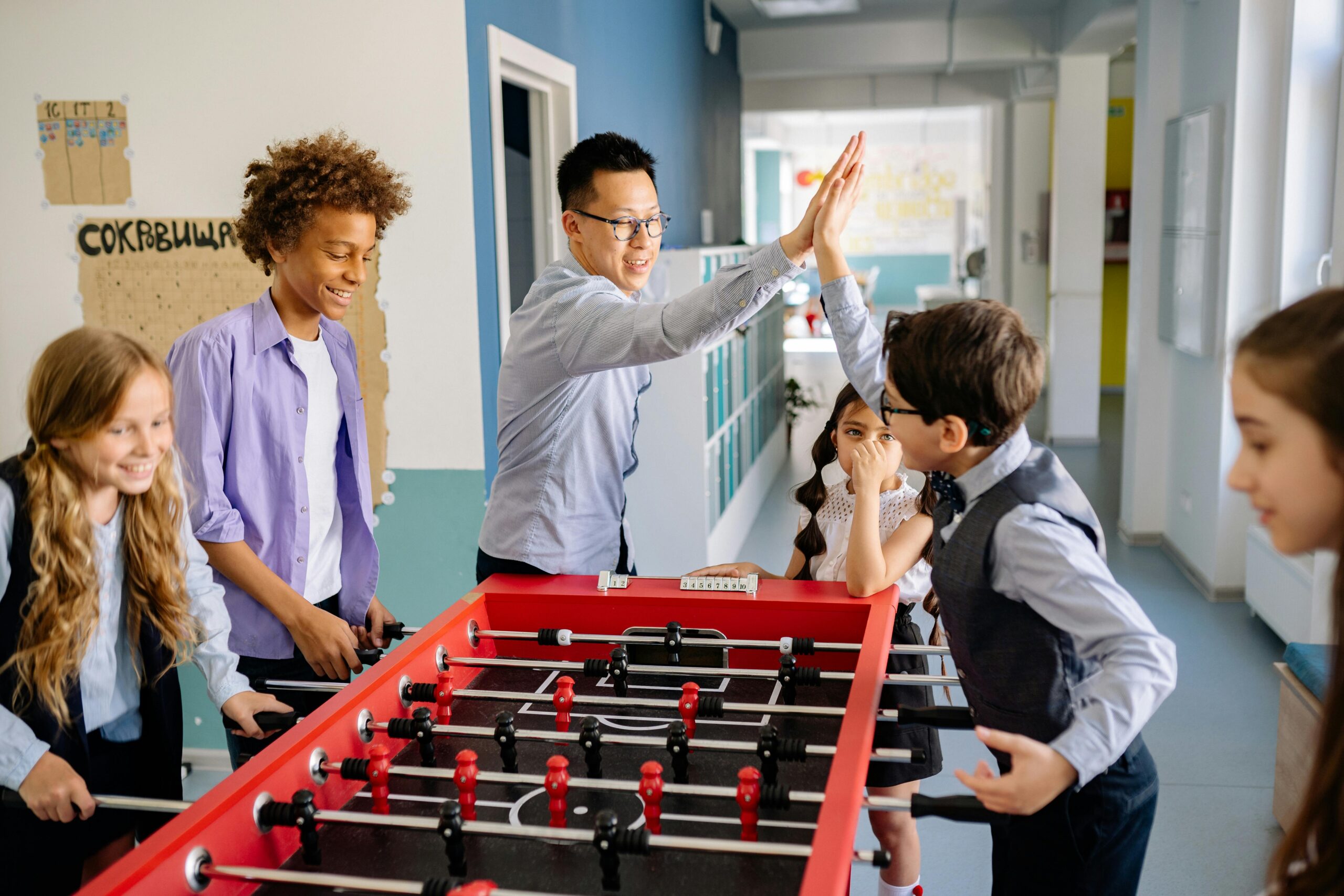
Understanding Social Skills in High School
High school social skills are a vital component in the developmental journey of adolescents.
At Thomas Keith Independent School, we recognise that these skills are paramount for students’ mental health and well-being.
Social skills refer to the interpersonal abilities that enable teens to interact effectively and harmoniously with others.
In the context of high school, social skills encompass a range of abilities such as communication, empathy, teamwork, and conflict resolution.
The importance of cultivating social skills among teens cannot be overstated.
During these formative years, students are navigating complex social dynamics while developing their sense of identity and autonomy.
High school social skills form an essential foundation for future relationships, academic success, and career readiness.
They help students manage stress, build healthy relationships, and develop a positive self-concept.
Furthermore, these skills are instrumental in teaching adolescents how to express their emotions appropriately and effectively in a school setting.
At Thomas Keith Independent School, we prioritise creating an environment that encourages the development of these competencies through interactive activities and a supportive community.
We understand that good social skills promote collaboration and allow students to engage meaningfully in their academic and extracurricular activities.
Effective communication is a cornerstone of high school social skills.
It involves not only speaking but also listening actively and interpreting nonverbal cues.
This proficiency allows students to share ideas confidently, facilitating better classroom participation and group work.
Another critical component is empathy, which involves understanding and sharing the feelings of peers.
This capacity not only fosters a sense of community but also encourages compassion and kindness, leading to a more inclusive school climate.
High school social skills also involve handling conflicts constructively.
Teaching students conflict resolution techniques can diminish bullying and reduce stress, ultimately contributing to a healthier school environment.
At Thomas Keith Independent School, we implement programmes that equip students with problem-solving strategies essential for managing interpersonal disputes.
There’s no doubt that high school social skills are crucial to the overall development of students.
By focusing on these skills, Thomas Keith Independent School aims to prepare students not just for exams, but for life beyond academia.
As our students master these social skills, they gain the confidence and competence needed to make meaningful contributions to their communities and beyond.
Why Social Skills Matter for Teens
High school social skills play a crucial role in the personal and academic development of teenagers.
In the high school environment, social skills are essential for building relationships with peers, teachers, and the larger community.
The teenage years are a critical period for social development due to the significant emotional and psychological changes adolescents experience.
Effective social skills help teens manage stress, enhance emotional intelligence, and promote healthy relationships.
Adolescents with well-developed social skills are better equipped to navigate complex social situations, reducing the likelihood of experiencing social anxiety or isolation.
High school social skills also contribute to improved communication abilities, allowing teens to express their thoughts and emotions more clearly.
These skills are integral to collaborative learning processes in school, where students often work in groups to achieve common goals.
By fostering empathy and understanding, social skills encourage teens to appreciate diverse perspectives and backgrounds, cultivating a more inclusive community.
Furthermore, strong social skills in high school are associated with better academic performance, as they enhance participation and engagement in classroom activities.
Outside of academia, these skills are invaluable in preparing teens for adulthood, enhancing their readiness for future professional environments.
At Thomas Keith Independent School, we understand the importance of high school social skills and are committed to providing our students with the tools they need for successful personal and professional lives.
The development of social skills in high school is not just an academic exercise but a lifelong endeavour that contributes to the overall well-being and success of our students.

Key Social Skills for High School Students
High school social skills are pivotal for students as they navigate the complex landscape of adolescence, where social interactions play a crucial role in personal and academic development.
Understanding the key social skills necessary for high school students can significantly enhance their ability to communicate effectively, build relationships, and collaborate with peers.
At Thomas Keith Independent School, we emphasise the development of these social skills to prepare students for future success.
Communication Skills
Effective communication is one of the most vital high school social skills.
Students must learn to express themselves clearly and listen actively.
Such skills include verbal and non-verbal communication, active listening, and the ability to interpret social cues.
Students equipped with excellent communication skills can negotiate, resolve conflicts, and engage in meaningful conversations, all of which are essential for building strong relationships.
Empathy and Emotional Awareness
Understanding and empathising with others’ emotions is another critical social skill.
High school students should be able to recognise emotions in themselves and others, which can help foster compassion and understanding.
Developing empathy allows students to connect with peers on a deeper level, enhancing their social interactions and overall emotional intelligence.
This emotional awareness is fundamental in managing stress and building a supportive community within the school environment.
Teamwork and Cooperation
Teamwork is an indispensable part of high school social skills, with students often required to work in groups for projects and extracurricular activities.
The ability to cooperate with peers, share responsibilities, and contribute effectively to a team’s goals is essential.
Students who excel in teamwork can adapt to different roles within a group, demonstrate leadership when necessary, and work towards collective achievement, fostering a positive and inclusive school climate.
Decision-Making and Problem-Solving
Being able to make informed decisions and solve problems is crucial for navigating high school and beyond.
Students with strong decision-making skills can assess situations, weigh options, and make choices that reflect their values and goals.
Problem-solving involves identifying issues, generating potential solutions, and implementing effective strategies.
These skills are essential for academic success and are invaluable in real-world situations where independent thinking and responsibility are required.
In summary, cultivating key social skills in high school students ensures they are well-prepared for interpersonal relationships, academic challenges, and future career opportunities.
At Thomas Keith Independent School, we strive to provide a supportive environment that nurtures these skills, enabling our students to thrive both personally and socially.
Top 10 Social Skills Activities for High School Students
High school social skills are critical for students as they prepare to face real-world challenges.
Fostering these skills through engaging activities not only enhances communication but also builds confidence and empathy among teenagers.
Below are ten engaging activities designed to bolster high school social skills, helping students to interact effectively with peers, teachers, and the community.
1. Getting to Know You Bingo
This classic mixer is perfect for jumpstarting conversation.
Students are given bingo cards filled with statements like “Has travelled abroad” or “Has a pet cat”.
The goal is to interact with peers to find matching statements.
As a result, students practice starting conversations and learn interesting facts about their classmates.
2. Emotion Charades
Emotion Charades is a fun twist on the traditional charades game, focusing on emotional intelligence.
Students draw cards with various emotions and act them out silently.
Their peers are challenged to guess the emotion, promoting empathy and understanding through non-verbal communication cues.
3. Debate Workshops
Debate workshops are instrumental in enhancing critical thinking and rhetoric skills.
Students are assigned topics and divided into teams to argue for or against.
These activities help students to learn about respectful disagreement, construct logical arguments, and improve public speaking – all crucial components of high school social skills.
4. Role Playing
Role-playing activities allow students to navigate different social scenarios.
By adopting roles, such as job interviewer or team leader, students practice problem-solving and adaptability.
This activity builds confidence and prepares students for diverse social contexts they will encounter outside school.
5. Speed Dating with Conversation Cards
Using a set of conversation starter cards, students engage in rapid, timed discussions.
The aim is to improve conversation skills under time pressure.
This exercise teaches students to listen actively, respond thoughtfully, and manage the ebb and flow of dialogue.
6. Kindness Tower Using Jenga
This game combines the classic Jenga with gratitude and kindness activities.
Each block in the tower contains an act of kindness or positive affirmation to share.
This not only strengthens cooperation but also cultivates a supportive and positive classroom environment.
7. Group Volunteer Work
Engaging students in volunteer projects helps develop empathy and teamwork skills.
Whether it’s assisting at a local shelter or organizing a charity event, students learn the value of contributing to their community.
Such activities also enhance school values and foster a sense of belonging.
8. Collaborative Story Writing
In small groups, students take turns writing sections of a story.
This requires clear communication, creativity, and the ability to build on the ideas of others.
The end result is a shared narrative that reflects cooperative effort, a crucial aspect of high school social skills.
9. Mind Mapping
Mind mapping exercises encourage students to organise thoughts graphically.
When done in groups, this activity promotes brainstorming and communication as students share and connect ideas on a central theme.
It aids in visual learning and developing organisational skills necessary in academia and beyond.
10. Drama Workshops
Drama workshops immerse students in various dramatic roles, enhancing high school social skills through artistic expression.
These workshops improve verbal and non-verbal communication and allow students to explore different perspectives, fostering a deeper understanding of human emotions and relationships.
At Thomas Keith Independent School, integrating these activities within our curriculum ensures that students not only excel academically but also develop the social skills vital for success in their personal and professional lives.
By engaging in these dynamic activities, students at our institution are well-prepared to contribute positively to society.
Incorporating Social Skills into the Classroom
High school social skills play an essential role in preparing students for the challenges of adult life, and incorporating these skills into the classroom is vital for fostering well-rounded development.
At Thomas Keith Independent School, we understand that the academic setting provides a unique opportunity to integrate social skills education seamlessly into daily activities.
Teachers can employ various strategies to embed high school social skills into the curriculum effectively.
One such strategy is the use of collaborative learning projects, which are excellent for teaching students about teamwork, empathy, and effective communication.
Group work allows students to engage with peers, learning to respect differing opinions and developing conflict-resolution skills.
Furthermore, role-playing exercises can be incorporated into subjects such as literature and history, enabling students to explore different perspectives and enhance their interpersonal skills through simulated scenarios.
This approach not only reinforces academic content but also cultivates critical social abilities like empathy and active listening.
In addition, teachers can incorporate social skills training into classroom management routines.
For example, starting each day with a short group discussion encourages active participation and the sharing of thoughts and feelings.
This routine helps build a supportive classroom atmosphere where students feel valued and respected.
Additionally, teachers can assign peer-review tasks, which develop students’ feedback-giving abilities and enrich their communication skills.
It’s important to note that high school social skills are not just limited to peer interactions.
Educators should also encourage the development of these skills through parent-teacher meetings and community involvement projects.
By providing students with diverse opportunities to practice social skills, we ensure they acquire the necessary tools to succeed both academically and in their personal lives.
In conclusion, incorporating high school social skills into the classroom is crucial for the holistic development of students.
By weaving social skills into everyday learning experiences, educators at Thomas Keith Independent School can equip students with the essential abilities they will need throughout their lives.
The Role of Parents and Community in Developing Social Skills
The development of high school social skills does not solely occur within the confines of the classroom; parents and the broader community play a pivotal role in this process.
High school social skills are essential for teenagers as they bridge the gap between adolescence and adulthood.
Parents serve as the first point of contact in teaching children fundamental social skills such as empathy, effective communication, and active listening.
From a young age, parents model these skills through their interactions with others, allowing teenagers to observe and learn in a naturalistic setting.
Community involvement further enhances these skills by providing diverse settings where students can practise and hone their abilities.
Engaging in community service projects is an excellent way for students to collaborate with peers and adults, fostering skills like teamwork and problem-solving.
By participating in local initiatives, teenagers have the opportunity to interact with individuals from various backgrounds, enhancing their cultural awareness and emotional intelligence.
Furthermore, parents can encourage participation in extracurricular activities that focus on social development such as drama clubs, debating teams, or volunteer organisations.
These environments offer a structured opportunity to practice high school social skills in real-world scenarios.
Parents can also facilitate open dialogues at home about social interactions, thereby reinforcing the skills acquired at school and within the community.
It is essential for community leaders and parents to work collaboratively, forming partnerships with educational institutions like Thomas Keith Independent School to ensure a holistic approach to nurturing social skills in students.
Through a collective effort, teenagers can be equipped with the necessary social competencies that prepare them for both personal and professional success.
Conclusion: Building a Foundation for Future Success
In the journey of adolescent development, high school social skills play an instrumental role in setting a foundation for future success.
These skills are not just about fostering immediate relationships but also about preparing teens for a lifetime of effective communication and interaction.
At Thomas Keith Independent School, we understand that teaching social skills is an investment in a student’s future, enhancing both personal and professional prospects.
High school social skills equip students to navigate complex social environments, encouraging empathy, resilience, and teamwork.
By mastering these skills, students can handle interpersonal relationships judiciously, which is crucial for both academic and career success.
Through a curriculum that prioritises social skill development, students gain the necessary tools to thrive in diverse settings.
In essence, focusing on high school social skills is about nurturing confident and capable individuals who can contribute positively to their communities.
By embedding these skills within our educational framework, we ensure that our students are prepared not only for exams but for the complexities of adult life, ultimately building a robust foundation for their future endeavours.
