



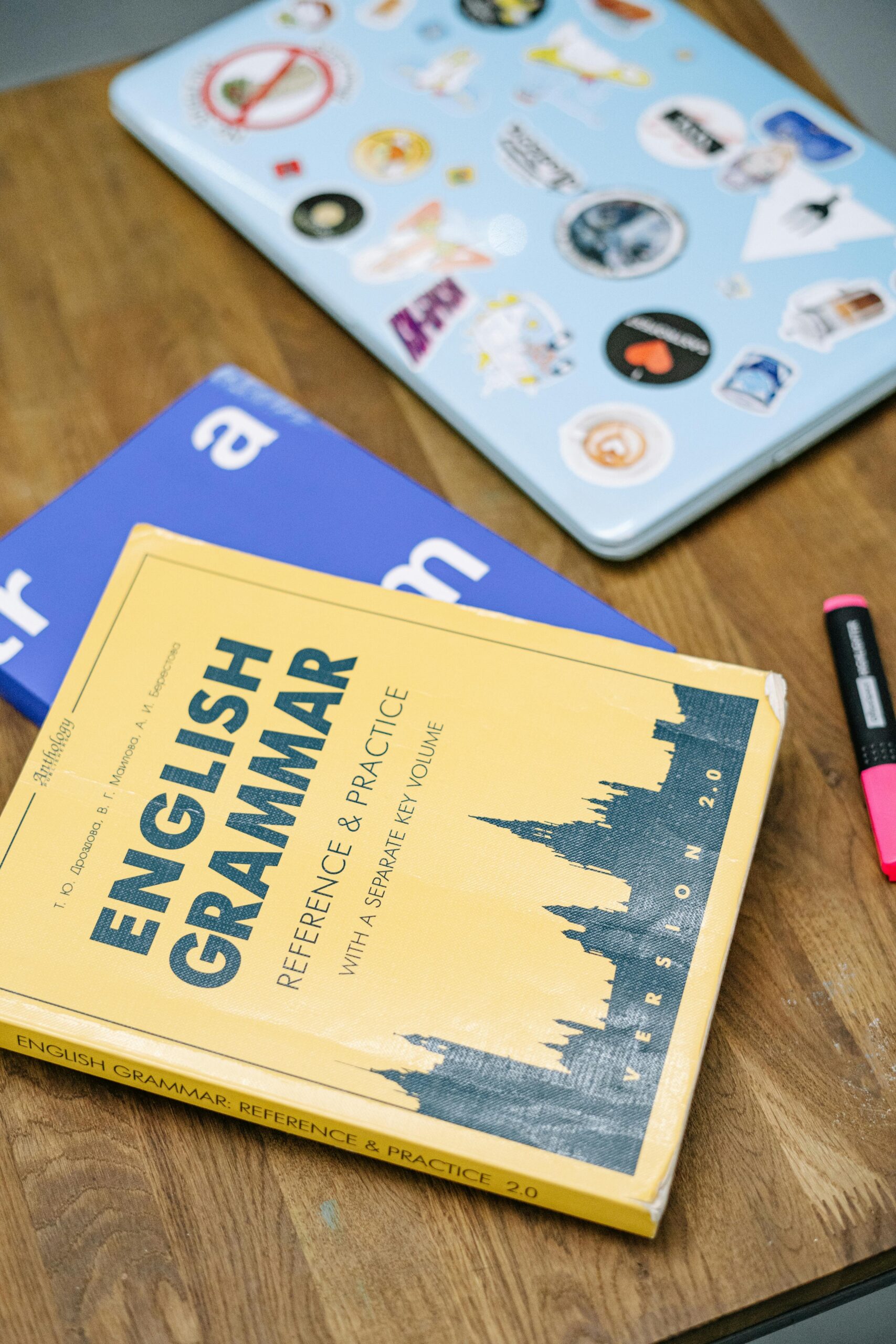
Introduction to Year 6 English
At Thomas Keith Independent School, understanding the English for Year 6 curriculum is essential for preparing students for higher education.
In this critical stage, Year 6 English serves not only as an academic requirement but also as a foundation for developing comprehensive reading, writing, and analytical skills.
Year 6 English is designed to enhance students’ abilities to interpret complex texts, making it a pivotal year for English language development.
Students delve into a variety of reading strategies, including identifying the main idea, understanding the theme, and deducing the author’s purpose and tone.
These skills are honed to prepare students for the academic challenges that await them in higher grades.
Moreover, the curriculum focuses on improving writing strategies, which are vital for developing coherent and persuasive arguments.
Year 6 English incorporates extensive vocabulary development, enriching students’ understanding of language structure and use.
This aspect of learning is crucial for effective communication and forms the basis of literacy.
Grammar and mechanics also play a significant role in Year 6 English, ensuring students can construct grammatically correct and structured sentences.
By addressing these core areas, Year 6 English at Thomas Keith Independent School equips students with the necessary skills to succeed academically while fostering a lifelong appreciation for the English language.
Our approach is methodical and comprehensive, supporting each student in their journey to literary proficiency.
Ultimately, English for Year 6 is more than just a subject—it’s a gateway to a deeper understanding of language that will benefit students throughout their educational journey and beyond.

Reading Strategies
In the English for Year 6 curriculum, mastering effective reading strategies is essential for students’ academic success and cognitive development.
Year 6 English focuses on deepening comprehension skills by utilising a variety of reading strategies that enhance understanding and analytical abilities.
At Thomas Keith Independent School, we emphasise these techniques to ensure each pupil becomes a proficient and reflective reader.
One of the foundational reading strategies in Year 6 English is identifying the main idea and theme.
Students are taught to discern the core message of a passage, which aids in understanding the author’s intent and the overarching theme of the text.
By examining key details and summarising information, learners improve their ability to analyse complex texts.
This skill is vital as it forms the basis for advanced analytical tasks in secondary education.
Another critical strategy is determining the author’s purpose and tone.
This involves evaluating the reasons behind a text’s creation, such as to inform, entertain, or persuade.
Understanding the author’s tone, whether it is formal, informal, sympathetic, or critical, allows students to appreciate the nuances of language and intent.
Effective use of this strategy enhances critical thinking and insight into different writing styles and perspectives.
Point of view is a further reading strategy that is explored comprehensively in Year 6 English.
Students are encouraged to identify whether a narrative is told from a first-person, second-person, or third-person perspective.
This understanding affects the interpretation of the text and helps students to consider how the narrators’ positions influence the storytelling process.
Additionally, engaging with text structure helps students to organise information and comprehend the layout of various genres.
Recognising patterns such as cause and effect, problem and solution, or chronological order enables pupils to grasp the organisational framework of a passage.
Year 6 English teaches these structures to boost students’ ability to recall and summarise information efficiently.
In conclusion, the reading strategies embedded in the English for Year 6 programme at Thomas Keith Independent School are designed to nurture advanced comprehension skills.
These strategies, including deciphering the main idea, authorial intentions, and structural elements, ensure that students develop into skilled readers equipped for future academic challenges.
Our commitment to these principles underscores our dedication to providing a robust educational foundation for all learners.
Main Idea and Theme
Understanding the main idea and theme is crucial in the English for Year 6 curriculum, as it lays the foundation for critical reading skills.
In the context of Year 6 English, the main idea refers to the central point or underlying message that an author wants to communicate through a text.
This forms the backbone of comprehension, enabling students to grasp what the text is primarily about, beyond surface details.
Identifying the main idea in a text helps students isolate the author’s core message.
Teaching students how to identify the main idea can be done through various strategies, such as summarisation and questioning.
Summarisation encourages pupils to condense a passage into a concise statement, focusing on the most significant points.
Questioning involves prompting students with questions that lead them to discover the central message.
Alongside the main idea, the theme represents the broader messages or underlying themes an author wishes to convey.
Themes in literature can be universal truths or ideas, such as courage, friendship, and perseverance.
In English for Year 6, students explore and distinguish between the main idea and theme by examining characters’ actions, settings, and plots to uncover deeper meanings.
Through discussions and guided analyses, students learn to make connections between the theme and the text as a whole.
By consistently applying these reading strategies, pupils develop enhanced analytical skills.
These strategies not only improve comprehension but also foster an appreciation for literary nuances.
At Thomas Keith Independent School, we prioritise nurturing these critical skills in our online learning environment.
Our goal is to cultivate astute readers who can critically evaluate texts, an essential component of the English for Year 6 programme.
Author’s Purpose and Tone
Understanding the author’s purpose and tone is a crucial aspect of the English for Year 6 curriculum at Thomas Keith Independent School.
The author’s purpose refers to the reason why a writer has created a text.
It can generally be categorised into three main objectives: to inform, to entertain, or to persuade.
Identifying the purpose not only enhances comprehension but also allows students to engage more critically with the material.
The tone of a text reflects the author’s attitude towards the subject or even the audience.
It is conveyed through choice of words and writing style, which can range from formal to informal, optimistic to pessimistic, and humorous to serious.
Recognising tone helps students to better grasp the nuances of a text, enabling a deeper understanding of the author’s intent.
For Year 6 English, developing the skill to discern both purpose and tone is invaluable.
Analysing these elements in a text encourages critical thinking and enables students to appreciate the complexity of various literary and informational texts.
Employing these techniques equips students to articulate their interpretations accurately, fostering improved reading and analytical skills in English for Year 6.
At Thomas Keith Independent School, we emphasise these skills as essential components of a comprehensive Year 6 English education.
By honing the ability to analyse an author’s purpose and tone, our students are better prepared for advanced literary criticism and adept at engaging with diverse text types.
Text Structure and Literary Devices
In the English for Year 6 curriculum, understanding text structure and literary devices is essential for developing proficient reading and writing skills.
Text structure refers to the organization of a text, which can significantly affect how information is conveyed and understood.
Common structures include chronological order, cause and effect, problem and solution, and compare and contrast.
Each structure provides a unique framework that aids Year 6 students in comprehending and analysing texts critically.
For instance, identifying a cause-and-effect structure can help students understand the relationships between events or ideas in a text.
Literary devices are tools that authors use to enhance their storytelling and convey deeper meanings.
Some common literary devices include metaphors, similes, personification, and alliteration.
In the English for Year 6 programme, recognising these devices allows students to appreciate the nuances of language and engage more deeply with texts.
When students identify a metaphor, for example, they can explore how it adds layers of meaning or emotion to the narrative.
Furthermore, the use of text structure and literary devices is not limited to literary texts alone.
Informational texts also follow specific structures and may use devices to engage readers or highlight important points.
For Year 6 students, developing the ability to discern these elements in both fiction and non-fiction texts is crucial for their academic journey.
At Thomas Keith Independent School, we offer a comprehensive approach to understanding text structure and literary devices, equipping students with the critical thinking skills needed for effective communication and interpretation.
By focusing on these aspects, our English for Year 6 curriculum ensures that students are well-prepared for more advanced studies and lifelong learning.
Writing Strategies
In the English for Year 6 curriculum, developing robust writing strategies forms a critical component of the learning process for students at Thomas Keith Independent School.
The importance of effective writing strategies lies in their ability to enhance clarity, coherence, and creativity in students’ written communication.
Understanding and implementing these strategies can significantly improve the quality of writing, a key focus in year 6 English.
One of the primary elements of writing strategies in year 6 English is organising writing effectively.
Students are taught to structure their ideas logically, beginning with a clear introduction that outlines the main points to be discussed.
This introduction sets the stage for elaborating on ideas in the body, where arguments are developed and supported with evidence.
A strong conclusion then ties the main points together, reinforcing the overall theme of the text.
Incorporating descriptive language and supporting arguments with precise details enriches the writing, making it more engaging and convincing.
This level of detail is crucial for students to master so they can effectively convey their ideas and influence their audience.
Editing and revising form another cornerstone of effective writing strategies in year 6 English.
Students learn the importance of reviewing and refining their work, checking for grammatical errors, punctuation, and sentence structure while ensuring the text remains coherent and cohesive.
This iterative process fosters a critical eye for detail and enhances the overall quality of the writing.
Research skills are equally vital and are integrated into writing strategies within the English for Year 6 framework.
Students are encouraged to gather information from reliable sources, assess the validity of their findings, and incorporate these insights into their writing.
This skill not only supports the development of evidence-based arguments but also encourages independent learning and critical thinking.
In summary, writing strategies in English for Year 6 focus on organising writing, developing coherent arguments, refining content through editing, and enhancing research skills.
These strategies are designed to equip students with the necessary tools to communicate effectively and express their ideas with clarity and confidence.
Organising Writing and Developing Arguments
In the English for Year 6 curriculum, mastering the skills of organising writing and developing arguments is crucial for students.
Effective writing is not just about getting words on the page; it requires a coherent structure and a logical flow of ideas.
At Thomas Keith Independent School, we emphasise the significance of these skills to enhance our students’ proficiency in Year 6 English.
One primary aspect of organising writing is the ability to structure an essay or composition.
Students are taught to employ a well-defined introduction, a detailed body, and a compelling conclusion.
This approach not only ensures clarity but also aids in the logical progression of ideas, which is crucial for engaging the reader.
By using outlines and graphic organisers, students can map out their thoughts before diving into the writing process.
Developing arguments is another critical component in English for Year 6.
Students learn to support their arguments with evidence and sound reasoning.
Critical thinking is fostered, encouraging pupils to question assumptions and present counterarguments.
By practising these skills, students gain confidence in their ability to persuade and inform through writing.
Incorporating feedback is vital in refining writing and argumentative skills.
At Thomas Keith Independent School, peer reviews and teacher feedback are integral parts of the learning process.
These interactions encourage students to reflect on their writing, make necessary revisions, and understand different perspectives.
In conclusion, the focus on organising writing and developing arguments in Year 6 English equips students with essential skills for academic success.
By nurturing these capabilities, Thomas Keith Independent School ensures that learners are well-prepared for future academic challenges, making them adept communicators and critical thinkers.
Editing and Revising
In the context of English for Year 6, editing and revising are critical steps in the writing process that help produce polished and coherent texts.
At Thomas Keith Independent School, we emphasise the importance of these stages in enhancing the writing skills of Year 6 English pupils.
Editing and revising involve different processes.
Editing focuses on correcting grammatical errors, improving syntax, and ensuring that punctuation and spelling adhere to standard English conventions.
This step is crucial for ensuring clarity and precision in writing tasks.
For Year 6 English students, learning how to effectively edit work provides an opportunity to strengthen their grasp of language rules.
Revising, on the other hand, requires looking at the writing from a broader perspective.
In this stage, students assess the structure and flow of their work, which might involve reorganising paragraphs, refining word choice, and enhancing sentence variety to improve engagement and coherence.
Revising allows students to critically evaluate their arguments or narratives to make them more compelling and logically structured.
For students in Year 6 English, developing these revision skills is fundamental as they transition into more advanced writing tasks.
The ability to efficiently edit and revise not only prepares them for set assessments but also instils a sense of pride and confidence in their writing abilities.
Moreover, practising these strategies fosters an analytical mindset that is invaluable across other areas of learning.
Thomas Keith Independent School integrates editing and revising into its Year 6 English curriculum through both individual tasks and collaborative exercises to ensure students effectively internalise these skills.
By the end of Year 6, students should be adept at identifying areas for improvement in their writing, equipping them with the tools necessary for academic success.
Vocabulary Development
Vocabulary development is a crucial component of English for Year 6, forming the foundation for effective communication and comprehension.
At Thomas Keith Independent School, we understand that expanding one’s vocabulary is not just about memorising words but also about understanding their nuances and contexts.
This section will explore methods to enhance vocabulary skills, ensuring students are prepared for advanced studies.
In English for Year 6, one primary strategy for vocabulary development is the study of prefixes and suffixes.
By dissecting words into their base components, students can infer meanings and expand their lexical repertoire efficiently.
Understanding these building blocks aids in deciphering unfamiliar terms, thereby enhancing reading comprehension and oral communication.
Another essential aspect of vocabulary development in Year 6 English is the exploration of synonyms and antonyms.
These exercises enable learners to express ideas more precisely and avoid repetition, enriching both their spoken and written language.
Incorporating activities that focus on synonyms and antonyms can significantly bolster a student’s ability to articulate thoughts with clarity and variety.
Context clues are further leveraged in English for Year 6 as a powerful tool to infer meaning.
Teaching students to use the surrounding text to ascertain the meaning of unknown words encourages independent learning and critical thinking.
This strategy not only expands vocabulary but also improves students’ analytical skills, essential for literary and informational text analysis.
Lastly, the focus on homophones and multiple-meaning words develops a nuanced understanding of English.
These lessons ensure that students can navigate the complexities of the language, recognising subtle differences that affect meaning and usage.
Such knowledge enhances both literacy and oral dexterity, which are crucial for academic success and effective communication.
In conclusion, mastering vocabulary in Year 6 English involves a comprehensive approach that includes understanding word structures, exploring relationships between words, and applying context-based learning.
Thomas Keith Independent School is committed to employing these strategies to foster higher-level language skills that are critical for academic advancement and everyday communication.
Prefixes, Suffixes, and Roots
Understanding prefixes, suffixes, and roots is essential to mastering the vocabulary in English for Year 6.
These elements form the building blocks of the language, allowing students to decode and expand their vocabulary knowledge efficiently.
In the context of Year 6 English, prefixes are added to the beginning of a root word to alter its meaning.
For example, adding the prefix “un-” to the word “happy” creates “unhappy,” instantly changing its meaning.
This process enhances comprehension skills, enabling students to grasp unfamiliar words encountered in texts.
Similarly, suffixes are added to the end of root words.
They can modify the word’s tense, part of speech, or meaning.
For instance, the suffix “-ed” is often used to indicate the past tense, turning “jump” into “jumped.”
This manipulation of root words with suffixes aids in forming grammatically correct sentences.
Roots, often derived from Greek or Latin, are central to understanding a word’s fundamental meaning.
For example, the Latin root “scrib” or “script” means “to write,” which is found in words like “describe” and “manuscript.”
Recognising roots helps Year 6 English students make educated guesses about the meaning of new words by associating them with words they already know.
Fostering an understanding of prefixes, suffixes, and roots not only enriches vocabulary but also bolsters reading comprehension and overall language proficiency.
At Thomas Keith Independent School, we focus on these linguistic strategies to ensure that our Year 6 students excel in their English studies, supported by a comprehensive curriculum that is both engaging and academically rigorous.
Synonyms, Antonyms, and Context Clues
In the English for Year 6 curriculum, developing a robust vocabulary is crucial for enhancing reading comprehension and writing skills.
Understanding synonyms, antonyms, and context clues are key components in achieving this goal.
Synonyms are words that have similar meanings, and learning them expands a student’s ability to express ideas more vividly.
By replacing common words with more specific synonyms, students can add nuance and depth to their writing.
For example, substituting “happy” with “ecstatic” or “joyful” can convey varying degrees of emotion, making the text more engaging for the reader.
Antonyms, on the other hand, are words that have opposite meanings.
Recognising antonyms helps students to understand contrast within texts and enhances their ability to grasp complex ideas.
For instance, understanding that “dark” is the antonym of “light” can assist students in interpreting themes or moods within literature.
Context clues are also vital in the English for Year 6, as they enable students to deduce the meanings of unfamiliar words without turning to a dictionary.
By analysing words or sentences around an unknown term, students can infer the word’s meaning based on the context.
For example, in the sentence “Despite the torrential downpour, the children were undeterred, playing happily in the rain,” the word “undeterred” can be understood as implying persistence, despite challenges.
At Thomas Keith Independent School, we emphasise the importance of these vocabulary strategies in our online English curriculum for Year 6 students.
By focusing on synonyms, antonyms, and context clues, we aim to enrich their language skills, equipping them with the tools needed for academic success.
Engaging with these vocabulary-building techniques not only prepares students for higher levels of education but also fosters a lifelong appreciation for the richness of the English language.
Grammar and Mechanics
In the English for Year 6 curriculum, a significant focus is placed on mastering grammar and mechanics, a fundamental aspect of developing proficient writing skills.
Grammar and mechanics form the backbone of effective communication, enabling students to express their ideas clearly and coherently.
Understanding grammar in Year 6 English is crucial for students to develop a solid foundation that supports more complex language skills.
This includes mastery of sentence structure, correct use of punctuation, and knowledge of syntax rules.
A deep understanding of grammar empowers students to construct sentences that effectively convey meaning and engage their audience.
Punctuation is another key element in the English for Year 6 syllabus, where students learn the significance of commas, full stops, semicolons, and other marks that guide readers through the text.
Correct punctuation enhances readability and helps prevent misinterpretations, making it an essential component of writing.
Moreover, mechanics in Year 6 English emphasise the importance of capitalisation, spelling, and formatting.
Each of these elements plays a role in presenting polished and professional writing.
Capitalisation rules teach students when to use uppercase letters, while spelling focuses on accuracy and the ability to recognise commonly misspelled words.
Formatting introduces students to presentations of written work, underlining how structure and layout influence the reader’s experience.
Overall, the study of grammar and mechanics in English for Year 6 aims to equip students with the skills necessary to communicate effectively in both written and spoken form.
By achieving proficiency in these areas, students at Thomas Keith Independent School can enhance their academic performance and engage confidently with more advanced English content in the future.
Sentence Structure and Punctuation
In the English for Year 6 curriculum, mastering sentence structure and punctuation is pivotal for developing proficient writing skills.
Pupils must understand how to construct clear and coherent sentences, as this forms the foundation of effective communication.
Sentence structure in Year 6 English focuses on the composition of simple, compound, and complex sentences.
Simple sentences contain one independent clause, providing a straightforward message.
Compound sentences, by contrast, connect two independent clauses, often using conjunctions such as ‘and’, ‘but’, or ‘so’.
Complex sentences introduce subordinate clauses, adding depth and detail to writing.
This variety in sentence construction not only enhances the readability of the text but also engages the reader by adjusting the rhythm and flow of the narrative.
Punctuation is an integral part of writing mechanics in Year 6 English.
Correct usage of punctuation marks such as full stops, commas, and question marks is essential for clarifying meaning and ensuring the text is easily understood.
Commas, for instance, are used to indicate a pause, separate clauses, or items in a list, thereby preventing ambiguity.
Quotation marks are employed to denote spoken words or dialogue and help distinguish the voice of the narrator from the characters.
Mastering these elements of punctuation enables students to write with precision and clarity, enhancing their ability to convey complex ideas effectively.
At Thomas Keith Independent School, we emphasise the importance of these fundamental writing skills within our Year 6 English programme.
By honing sentence structure and punctuation, students become capable writers who can articulate their thoughts with accuracy and flair.
This focus prepares them for the more advanced writing challenges they will encounter in secondary education, equipping them with the tools needed for academic success.
Nouns, Pronouns, and Verbs
In the English for Year 6 curriculum, a thorough understanding of nouns, pronouns, and verbs is essential for developing strong language skills.
These fundamental components of grammar serve as the building blocks for constructing meaningful sentences and effective communication.
Grasping these concepts within the context of Year 6 English enables students to enhance their writing and speaking abilities.
Nouns are at the core of English grammar, representing people, places, things, or ideas.
In English for Year 6, students explore different types of nouns, such as common, proper, collective, and abstract nouns.
A solid grasp of nouns allows students to accurately describe the world around them, providing clarity in both speech and writing.
Pronouns play a crucial role in the English for Year 6 programme by replacing nouns to avoid redundancy and create smoother sentence flow.
Students learn about various pronouns, including personal, possessive, reflexive, and relative pronouns.
By mastering the use of pronouns, Year 6 students can construct more concise and varied sentences, enhancing their overall writing style.
Verbs, the action words in a sentence, are a key focus of the English for Year 6 curriculum.
Students delve into verb types such as action, linking, and auxiliary verbs, as well as verb tenses to convey timing and duration.
Understanding verbs empowers students to express actions and states of being with precision, significantly improving their narrative and descriptive writing skills.
The study of nouns, pronouns, and verbs in the English for Year 6 syllabus is designed to build a robust grammatical foundation.
Through engaging activities and targeted exercises, students gain competence in identifying and using these parts of speech effectively.
This knowledge not only supports their current academic endeavours but also prepares them for more complex language tasks in the future.
At Thomas Keith Independent School, we prioritise a comprehensive and engaging approach to teaching these essential grammar components, ensuring our students excel in English for Year 6 and beyond.
Conclusion
In the journey through the English for Year 6 curriculum, students are equipped with a comprehensive foundation to enhance their reading and writing abilities.
The study of grammar, vocabulary, and literary analysis forms a cornerstone of the English for Year 6 experience.
By mastering skills such as sentence structure, punctuation, and the effective use of nouns, pronouns, and verbs, students are better prepared for advanced literacy.
The English for Year 6 programme at Thomas Keith Independent School not only focuses on the mechanics of language but also fosters critical thinking and analytical skills essential for academic success.
Understanding the author’s purpose and the structure of texts enables students to engage more deeply with both literary and informational content.
At the heart of our approach is the commitment to making learning both engaging and educationally robust.
Ultimately, the goal is to ensure that students hold the tools needed for lifelong learning and effective communication, preparing them for the academic challenges that lie ahead.
