



Introduction to Phonics Phases
The phases of phonics represent a structured pathway through which children at Thomas Keith Independent School learn to identify, segment, and blend sounds, establishing a robust foundation in literacy.
Phonics phases are integral to early education, providing children with a systematic approach to decoding words, enhancing their ability to read and spell proficiently.
At the core of these phases lies phonemic awareness, which is crucial for young learners to recognise and manipulate phonemes, the smallest units of sound that construct words.
In the early stages, children engage with environmental sounds, distinguishing various noises that set the stage for recognising letter sounds.
During these initial phases, the focus is on engaging activities that introduce children to the world of phonics, making learning both enjoyable and educational.
As students progress through the phonics phases, they move from simple letter sounds to understanding complex structures such as digraphs and alternative spellings.
Introducing phonics at an early age is a recognised educational framework that supports both parents and teachers in guiding children through their literacy journey.
Our approach at Thomas Keith Independent School combines traditional teaching methods with innovative practices to ensure that the educational needs of each child are met.
Utilising a comprehensive phonics strategy, we strive to make learning a meaningful and rewarding experience, incorporating games and interactive sessions that reinforce what children learn in each phase.
The ultimate goal is to build confident readers who can tackle tricky words with ease and develop a love for reading.
With each phase, the complexity increases, challenging students to apply their skills in new ways and solidifying their understanding of how phonics relates to reading and writing.
The systematic instruction within phonics phases allows for continuous assessment, ensuring that students are adequately supported throughout their learning process.
Our framework encourages parental engagement, allowing parents to be part of their child’s educational adventure, making learning a collaborative effort between school and home.
Understanding the importance of each phase and the role it plays in literacy development is crucial for producing independent and capable readers.
As we navigate through each phase, students are equipped with the skills to not only recognise words but also understand their meaning, forming a critical part of their language development.
The methodology behind the phases of phonics ensures that every child’s learning journey is both thorough and adaptive, catering to individual needs and learning styles.
Through consistent and focused teaching, the phases of phonics lay the groundwork for lifelong literacy skills, empowering students to excel in both academic and personal endeavours.

Phase 1: Phonemic Awareness
Understanding the foundational stages of the phases of phonics is crucial for fostering early literacy skills in children.
Phase 1, often referred to as Phonemic Awareness, serves as the cornerstone for developing effective reading abilities.
This phase is not about recognising written letters but focuses on the auditory skills that underpin all the phonics phases.
In Phase 1 of the phonics journey, the primary goal is to attune children’s ears to the sounds around them.
Children learn to identify and distinguish various sounds through interactive and engaging activities.
These sounds include environmental noises, instrumental sounds, and even the different tones and pitches in human speech.
A key component of Phase 1 is sound discrimination.
Children engage in activities that develop their ability to distinguish between similar sounds and recognise slight differences.
This skill is essential for differentiating phonemes, the smallest units of sound that make up words.
Moreover, Phase 1 activities include rhythm and rhyme exercises.
These activities enhance a child’s ability to predict patterns in language, which is a precursor to reading fluency.
Alliteration and voice sounds are also introduced, allowing children to play with and manipulate sounds, thereby enhancing their phonemic awareness.
Oral blending and segmenting are critical aspects introduced in this phase.
Children practice taking individual phonemes and blending them into whole words, as well as segmenting whole words into constituent sounds.
This ability to process and manipulate sounds prepares them for the later phonics phases where they will learn to match sounds to letters.
At Thomas Keith Independent School, we emphasise the critical nature of Phonemic Awareness as a preparatory stage that leads to more complex phonic skills in subsequent phases.
By engaging children with captivating activities and games, we ensure that they progress confidently through their phonics phases, building a robust foundation for continued literacy advancement.
Phase 1 lays the groundwork for the educational journey, setting students on the path to becoming proficient readers.
Understanding the significance of this phase helps parents and educators support young learners as they build essential phonemic skills.
Phase 2: Learning Letter Sounds
Phase 2 of the phonics phases is a critical stage where young learners begin to explore and understand the fundamental relationship between letters and sounds.
This crucial phase focuses on developing a child’s ability to recognise and pronounce the initial 19 letter sounds, a foundational skill in their phonemic journey.
During Phase 2, children are introduced to the basic building blocks of phonics, which include consonants and short vowels, and they start recognising the unique sound of each letter.
The phonics phases aim to give children the ability to blend sounds to form simple words, an essential skill that sets the stage for more advanced reading and writing abilities.
Engaging activities like singing alphabet songs, practising with phoneme cards, and playing letter-sound games help solidify these foundational skills.
This phase also emphasises oral blending and segmenting, allowing children to understand how sounds work together to create words they can listen to and repeat.
As part of the phonics phases, learning letter sounds equips children with the skills needed to decode simple words independently.
Encouraging them to practice regularly helps to reinforce their learning, providing a confident voice when reading aloud.
Teachers and parents play a pivotal role in this phase by creating an interactive learning environment that fosters curiosity and engagement.
Thomas Keith Independent School ensures that students have access to comprehensive resources tailored to solidify their understanding of the phonics phases.
By the end of Phase 2, children should be able to identify and articulate the distinct sounds associated with each targeted letter, preparing them for the complexities of subsequent phonics phases.
This analytical approach to Phase 2 ensures that learners build a robust foundation which supports their academic progression through subsequent stages of literacy development.
Phase 3: Digraphs and Blends
Phase 3 of the phonics phases marks a significant advancement in a child’s phonics journey, where the focus shifts to digraphs and blends.
This stage is crucial as it introduces children to the concept that certain sound combinations represent unique phonemes.
Understanding digraphs and blends forms the foundation for developing more complex literacy skills.
Digraphs are two letters that come together to make a single sound or phoneme, such as ‘ch’, ‘sh’, or ‘th.
These are essential in helping children understand that not all sounds match a single letter.
Incorporating digraphs improves their ability to decipher words more accurately and fluently.
Blends, on the other hand, consist of two or more consonants where each distinct sound can still be heard, like ‘st’ in “stop” or ‘bl’ in “blue”.
Learning blends help children with auditory discrimination, allowing them to break down words into their component sounds for easier reading and spelling.
Using games and activities in teaching these concepts helps boost engagement and retention.
Activities such as matching words with pictures or constructing word families encourage children to experiment with language.
This phase also significantly aids in enhancing their phonemic awareness by enabling them to recognise and manipulate sounds.
Practising Phase 3 effectively requires a strategic approach.
At Thomas Keith Independent School, we emphasise the importance of using phonic games, visual aids, and interactive reading sessions to make learning digraphs and blends both informative and enjoyable.
This tailored approach ensures that children develop their literacy skills in a supportive and fun environment.
In conclusion, Phase 3 is an essential part of the phonics phases that bridges simple letter-sound correspondence to more complex language constructs.
Mastering digraphs and blends equips children with the necessary skills to tackle reading and spelling challenges with increased confidence and competence.
Phase 4: Long Vowels and Tricky Words
Phase 4 of the phonics phases is a critical stage where children at Thomas Keith Independent School advance their understanding of the sound system of the English language by focusing on long vowels and tricky words.
This phase builds upon the foundation established in the earlier phases of phonics, enabling children to read and spell with greater accuracy and confidence.
In this phase, long vowels become a primary focus.
Long vowels are vowels that say their name within a word, such as the ‘a’ in ‘cake’ or the ‘o’ in ‘bone. ‘
Understanding long vowels is essential for children as it improves their ability to decode unfamiliar words and enhances their spelling abilities.
In this phase, children begin to encounter words like “see,” “make,” and “like,” which incorporate these long vowel sounds.
Alongside long vowels, tricky words pose a unique challenge in Phase 4.
Tricky words are those that do not necessarily follow conventional phonetic patterns, making them difficult for children to decode using standard phonics principles.
Examples of tricky words include “said,” “what,” and “was.”
To master these, children must engage in frequent practice and memorisation, as these words often appear in everyday language and literature.
Interactive activities and phonics games play a significant role in reinforcing the recognition and use of long vowels and tricky words.
At Thomas Keith Independent School, we employ a variety of teaching methods to ensure that children remain engaged and motivated throughout this learning process.
By using visual aids, auditory exercises, and reading practice, children can gradually internalise these concepts, leading to a deeper understanding of the English language.
Furthermore, Phase 4 encourages the use of phonemic awareness strategies.
These strategies include segmenting words into individual sounds and blending them, which helps children to navigate tricky words and long vowels effectively.
This process not only strengthens their phonics skills but also underpins their overall literacy development.
In conclusion, Phase 4 of the phonics phases represents a pivotal moment in a child’s phonics journey.
By mastering long vowels and tricky words, children at Thomas Keith Independent School can enhance their reading and writing fluency, setting a solid foundation for future academic success.
The focus on these elements ensures a comprehensive understanding of the complex relationships between letters and sounds, which is vital for becoming a confident and proficient reader.
Phase 5: Alternative Spellings
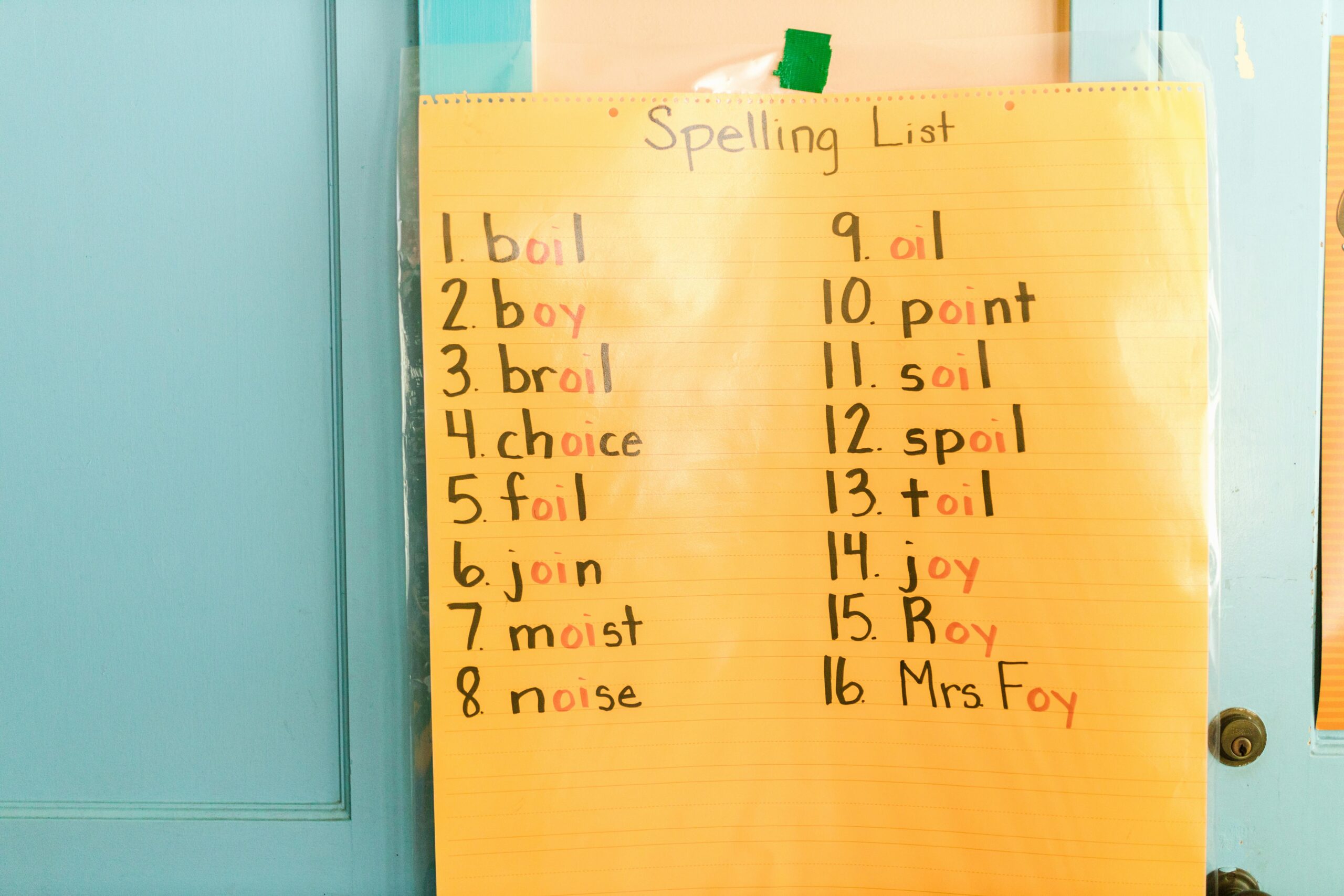
Phase 5 of the phases of phonics is crucial as it introduces learners to alternative spellings for sounds they have already encountered.
In this phase, children begin to explore the complexity of the English language, recognising that there are multiple ways to spell the same sounds.
This is an essential step in developing robust literacy skills since English is rife with homophones and variant spellings.
During Phase 5, students learn about the various graphemes that can represent the same phoneme, expanding their understanding of phonics.
For example, they learn that the /ai/ sound can be written as ‘ai’ in ‘rain’, ‘ay’ in ‘day’, or ‘a-e’ in ‘cake’.
This phase builds on the phonics phases that have come before, enabling children to approach reading and writing with greater confidence and versatility.
Alternative spellings also require learners to stretch their phonemic awareness, as they must discern which spelling fits the word contextually.
To achieve this, educators often use a range of phonics games and activities designed to engage students actively.
These activities can include sorting exercises, where children categorise words by their spelling patterns, and using flashcards to match words with similar sounds but different spellings.
At Thomas Keith Independent School, we emphasise the importance of practising these skills regularly.
By incorporating varied literacy activities, we ensure that children are not only able to recognise alternative spellings but also apply them effectively in their reading and writing.
It is important to note that mastery of this phase doesn’t come overnight.
Children may need continued practice and support to fully grasp the nuances of alternative spellings.
The objective by the end of Phase 5 is for students to have a comprehensive understanding of the intricate nature of English spelling systems, positioning them well for the subsequent phases of phonics.
For parents and educators, providing consistency in teaching methods and ample opportunities for children to explore these spelling alternatives is key.
With dedication and practice, children can make significant progress through Phase 5, paving the way for advanced phonic knowledge in future learning.
Phase 6: Advanced Phonic Knowledge
Phase 6 of the phonics phases marks the culmination of a child’s journey in phonics education, focusing on advanced phonic knowledge and skills that extend beyond the foundational aspects covered in earlier phases.
At this stage, learners are expected to consolidate their knowledge from previous phases of phonics, enabling them to tackle more complex reading and writing tasks.
The primary goal in this phase is to enhance fluency and accuracy in reading through the application of advanced spelling rules and the recognition of more sophisticated word structures.
An important aspect of Phase 6 is the focus on morphology, where children learn about prefixes, suffixes, and root words.
This deeper understanding allows for greater versatility in reading comprehension and written expression, which are essential skills in mastering advanced phonics phases.
The integration of advanced spelling techniques is another critical element in Phase 6.
Children are encouraged to practise spelling strategies that involve the understanding of grammatical rules and patterns, which are pivotal for correct spelling.
This includes exploring homophones, silent letters, and different ways of representing sounds with various graphemes.
At Thomas Keith Independent School, we believe that nurturing students’ advanced phonic knowledge in Phase 6 significantly boosts their confidence in both reading and writing.
Activities that encourage children to explore texts critically and creatively are central to this phase.
Tasks such as dictation, independent writing exercises, and reading comprehension activities are designed to solidify their advanced phonic skills.
Furthermore, educators are advised to encourage children to engage with a wide range of reading materials to apply their phonics knowledge in varied contexts.
This phase requires continuous support and practice, as it is essential for developing a proficient and articulate reader and writer.
Phase 6 of the phonics phases represents a transformative period where children transition from decoding simple texts to exploring more nuanced literary works.
Our approach at Thomas Keith Independent School is structured to ensure that children not only meet these challenges but also exceed them, setting a solid foundation for lifelong literacy skills.
Tips for Parents and Educators
Understanding the phases of phonics is crucial for both parents and educators who aim to facilitate children’s literacy development effectively.
At Thomas Keith Independent School, we emphasise the importance of this foundational knowledge in helping children progress through their phonics journey successfully.
Here are some practical tips that can benefit parents and educators in supporting children throughout the different phases of phonics.
1. Familiarise Yourself with the Phonics Phases:
An understanding of the six phases of phonics allows you to tailor support to a child’s current learning stage.
Phase 1 focuses on phonemic awareness, while Phase 6 deals with advanced phonic knowledge, with each phase building upon the previous one.
2. Engage in Daily Practice:
For phonics to be effective, consistent practice is key.
Incorporate short, daily sessions where children can explore sounds, words, and letter combinations.
Utilise games and activities that make learning phonemic skills enjoyable and less of a chore.
3. Utilise Resources and Tools:
Leverage a variety of phonics resources, such as flashcards, educational apps, and online platforms.
These tools can enhance engagement and provide diverse ways for children to interact with phonemes, graphemes, and tricky words across the phonics phases.
4. Encourage Reading Aloud:
Reading aloud is a powerful method to reinforce phonics skills.
It allows children to hear how phonemes and words are pronounced and helps them apply their knowledge of blends, digraphs, and alternative spellings in context.
Pair reading sessions with follow-up discussions to enhance comprehension and retention.
5. Foster a Supportive Learning Environment:
Creating an environment that encourages exploration and learning is essential.
Provide positive reinforcement, be patient, and celebrate small achievements to build confidence.
For educators, adapting classroom strategies to cater to varied learning styles can make the phonics phases more accessible and effective for all children.
By applying these strategies, both parents and educators can contribute to a more rewarding and successful phonics learning experience.
At Thomas Keith Independent School, our goal is to empower you with the knowledge and resources needed to support children through their phonics phases, ensuring a strong foundation in literacy.
Conclusion
The phases of phonics represent a structured and systematic approach to teaching children how to understand and use the sound and letter patterns in the English language effectively.
By navigating through each phase, from phonemic awareness to advanced phonic knowledge, educators and parents can support children in developing strong reading and spelling skills.
These phonics phases offer a foundation for language that is both comprehensive and adaptable, providing children with the skills necessary to approach new words with confidence.
At Thomas Keith Independent School, we emphasise the importance of each phase of phonics as a critical component of literacy education.
By integrating these phases of phonics into our curriculum, we ensure that our students are equipped with the essential tools for academic success.
In conclusion, the careful implementation of the phases of phonics fosters not only literacy development but also a lifelong appreciation for the richness of language.
